Kapta · 15/09/2026
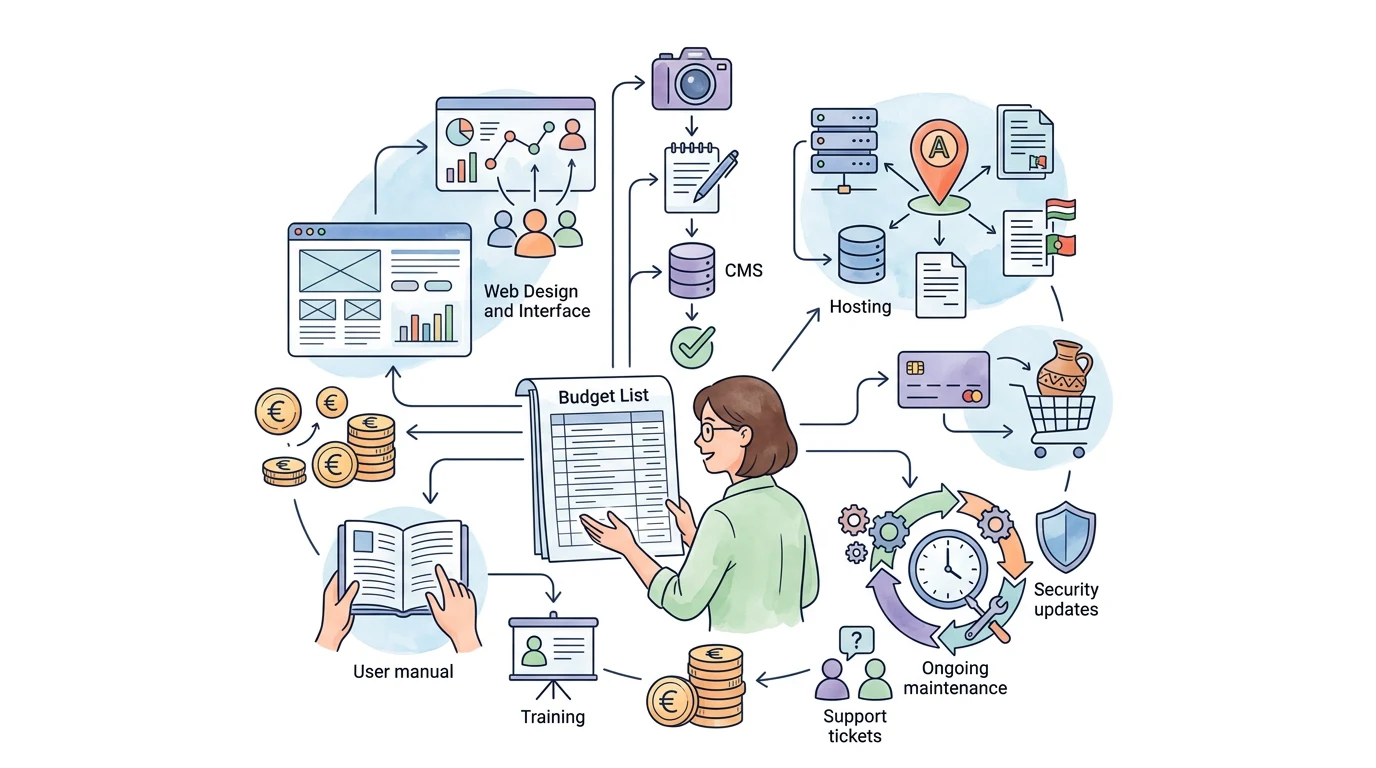
A useful quote turns the website idea into verifiable deliverables. It should explain what will be built, what your business must supply and the operating costs after launch.
Why is a page count insufficient?
Two pages can require very different work. An information page with approved copy differs from one with search, availability and payment. Describe visitor actions and external connections before comparing prices.
Which items should be listed?
Structure, design, implementation, content preparation, translation, data entry and testing. Confirm review rounds and how scope changes are handled. If you want to edit content, include the management system and required training.
Which costs continue after launch?
Ask for domain, hosting, maintenance, licences and external services. Identify who contracts and manages each component. Maintenance coverage varies; the proposal should explain what happens when something fails or the site needs an update.
How should integrations be compared?
Distinguish an external link, embedded component and a connection exchanging data. Ask for systems, included events and fields, and acceptance tests. 'Integration' alone leaves too many decisions unresolved.
What should I send Kapta?
Your objective, current site, languages, expected pages and essential features. Mark what is ready and what needs creating. Use the website cost guide to organise the request without assuming project-dependent prices or inclusions.
